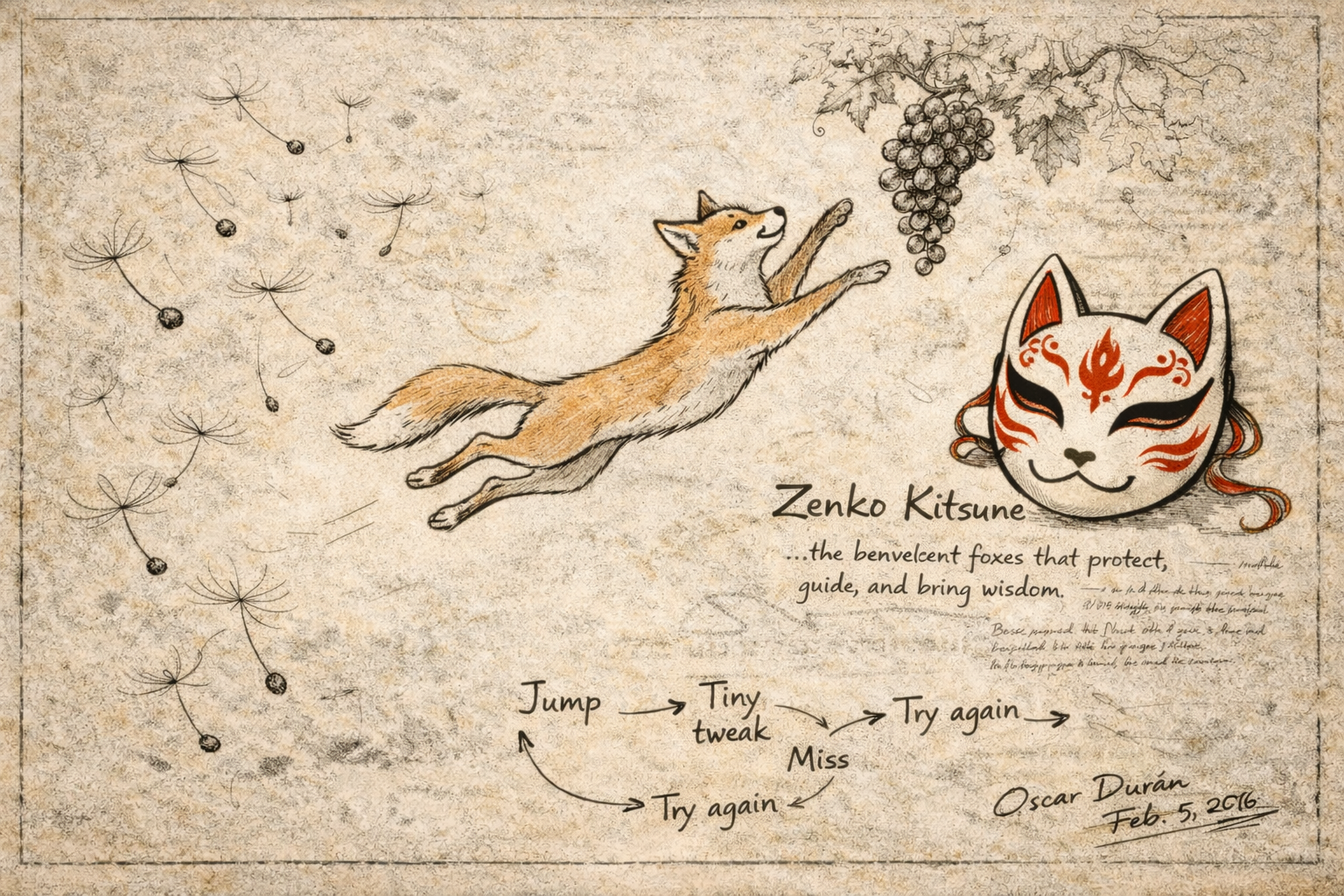
Reaching Before We Have Language
(Notes on curiosity, posture, and learning together)
We all reach for things in this world.
Long before we even know how to name what it is we’re actually reaching for.
I believe we are all born with a thirst and deep desire to reach for our dreams. Somewhere along the way of humanity, we hae acepted that reahing is something for the “abitious”. I see it so much in our work, not jsut with my fellow rpacititoners, but in theneohgborods in all our comminunties. I have encourted so may wondrful beaurful souls who have so many gifts to offe this word but they have these fears, self dobts, and sometimes lies we tells ourselves which are hingdering thoise dreas,.
But as I have processed this idea of “reaching for our dreams”, what it actually is (not just what it means), when do the vluaes take hol;d. Where did they come from. How do we sustain such energy and seld confindent?
I realize that reaching and ambition are very differnt. Ambition as word seems to be an unitneitally porkarizing word. You see what we think of as amiiton, is actaully differnt.
It’s attraction.
It’s gravity.
It’s the feeling that something beautiful is hanging just out of the reach of your hands.
I legit think, the first book I ever loved was like that.
A single, bound hardcover.
A collection of Aesop’s Fables.
I can’t even tell you how old I was.
It feels like it was before I could really read… or right as I was learning.
I remember the weight of it in my hands.
How it felt important.
Like something special, meant to be kept.
The illustrations were soft and watery.
Colors bled into the paper.
Nothing sharp.
Nothing loud.
There were a lot of stories in that one book. Each story a super short story, like mere sentences short. Perfect for a young adventurer who was excited to hit the Reading Rainbow.
But the goods new, there are Enough that you didn’t need to finish it.
You returned to it.
I had a few favorites.
But the one I always went back to was the fox and the grapes.
He stands under a vine.
He looks up.
And even now, I can still see what I imagined back then.
Big, full clusters.
Dark and cool.
So swollen with juice they look like they might split if you pressed them between your fingers.
The kind of grapes that make your mouth wake up.
The kind you reach for without thinking.
Under the Vine
(A small story about effort, posture, and timing)
The story is so short, it really invites you to stare at the chill fun picture and use your imagination to see the whole picture.
The fox steps forward.
He tilts his head.
Looks at the ground in front of him.
Lifts one paw.
Then the other.
A tiny shuffle.
A quick set of the shoulders.
And then, up.
He jumps.
Almost gets it.
Almost.
He lands.
Smiles to himself.
Then jumps again.
This one higher.
And just a little prettier than it needs to be.
A soft twist in the air.
A neat landing.
The grapes stay right where they are.
He pauses.
Looks up.
Then, for just a blink, looks out.
And says it.
“They were probably sour anyway.”
And that’s the story.
Or at least…
that’s how I thought it ended when I was a kid.
Later, and I mean much later, I realized I had been paying attention to the wrong part.
Not the miss.
The learning.
Walking With You Into the Work
(Notes from neighborhoods, meetings, and real life)
And this is the part where I always want to slow down and just… walk with you for a second.
Because in our work, you know… housing, neighborhoods, systems, people, all of it,
it’s honestly way less dramatic than we make it.
It’s more like:
we try something,
we watch what actually happens (not what the slide said would happen),
we change one small thing,
and then we try again.
That’s it.
That’s the job.
I know.
Not very cinematic.
But it works.
And I’ve learned this the hard way, when we do this work together, what really stalls us isn’t money, or talent, or even politics half the time.
It’s when curiosity quietly leaves the room.
When nobody feels safe enough to say,
“Well… that was weird.”
or
“Uh… did that work the way we thought it would?”
or my personal favorite,
“I was like… dang… I really thought that was gonna land.”
The fox under the vine?
He’s doing our work.
No big speech.
No spiral.
No blaming himself.
He’s just like…
…okay.
That’s information.
And honestly, that’s good news for us.
Because it means progress doesn’t belong to the fanciest person in the room.
Or the person who sounds the most confident.
Or the one with the cleanest plan.
It belongs to the people who are willing to stay in it together long enough to learn.
Reaching isn’t naïve.
In our work, reaching is how we figure out where the real edge actually is.
Most of the projects we care about…
most of the communities we love…
most of the things we’re still trying to build…
they don’t start with certainty.
They start with a small, honest jump.
A miss.
And then someone next to you, usually a little tired, usually still hopeful, says,
“Well…
okay.
So what did that just teach us?”
A Quiet Scholar in the Background
(Notes on learning, making, and not over-complicating it)
…and this isn’t just a cute fox metaphor, by the way.
There’s real learning science underneath how a lot of our work has evolved.
One of my favorite quiet influences is Seymour Papert.
One small nerdy footnote, friendly nerdy.
He was a South-African–born mathematician and computer scientist who helped shape how we even think about learning with technology.
He also helped start this tiny little place called
MIT Media Lab.
You know.
No big whoop.
Just casually helped launch one of the most creative learning labs in the world.
And what I love about him is that his whole thing was simple:
People don’t really learn by being told.
We learn by making something…
watching it fail…
and then tinkering with it.
Which, honestly, tracks perfectly with a house full of LEGO and half-finished ideas.
He called it constructionism, the idea that understanding shows up when you’re building in the real world, not just thinking in your head.
And that’s exactly what our work looks like.
Not theory first.
Not policy first.
We try something in a real neighborhood.
With real people.
With real consequences.
Then we go,
“Well… okay… that part didn’t do what we thought it would.”
And instead of hiding it, or spinning it, or pretending it was always the plan…
we change the thing.
That’s the research backbone under what we’re doing.
Our projects are not products.
They’re prototypes.
So when we say
reach → notice → adjust → reach again
that’s not inspirational language.
That’s literally how learning works.
In practice.
In communities.
In our work.
Which is why that fox still makes me smile.
Because before I ever had language for housing systems, or community development, or civic design…
he was already showing the whole method.
Jump.
Miss.
Tiny tweak.
Try again.
And somewhere in the middle of that very human, very clumsy loop…
real understanding shows up.
State of Us as Energy in Motion
(Notes on reaching, exchange, and human systems)
And here’s the part I’ve slowly come to see, just by watching us work.
When we reach…
like, actually reach, together…
that’s how our individual selves and our partnership clusters move what I call our State of Us energy.
Not by speeches.
Not by plans.
By reaching.
Yeah, I know.
It sounds soft.
But it’s not.
It’s movement.
In our work, I’ve been able to document three really consistent ways that energy transfers between people, teams, and systems.
I’ve talked about them before, but just to name them again:
Agitation.
Stimulation.
Attenuation.
Three different kinds of exchange.
Three different ways momentum shifts.
And the thing I keep learning, kind of to my own surprise, is that energy doesn’t really stop.
It just changes form.
It reroutes.
It softens.
It spikes.
It cools.
Right now, honestly…
I’m still observing how these three actually work.
I’m still watching the patterns.
But in our work, and in regular life too, it really matters that we use words that actually fit what’s happening on the ground.
Not fancy ones.
Useful ones.
And for me… the word that keeps holding all of this together is still just:
reaching.
Because you can explain reaching to a five-year-old.
You can feel it in your body.
You don’t need a framework to understand it.
You try.
You miss.
You learn something real.
You reach again.
It’s simple in the best way.
And maybe that’s the quiet gift in that old fox story after all.
Not how to avoid disappointment.
But how people,
and teams,
and families,
and communities,
learn to move their energy forward…
together…
one small, honest reach at a time.